Shopping Cart
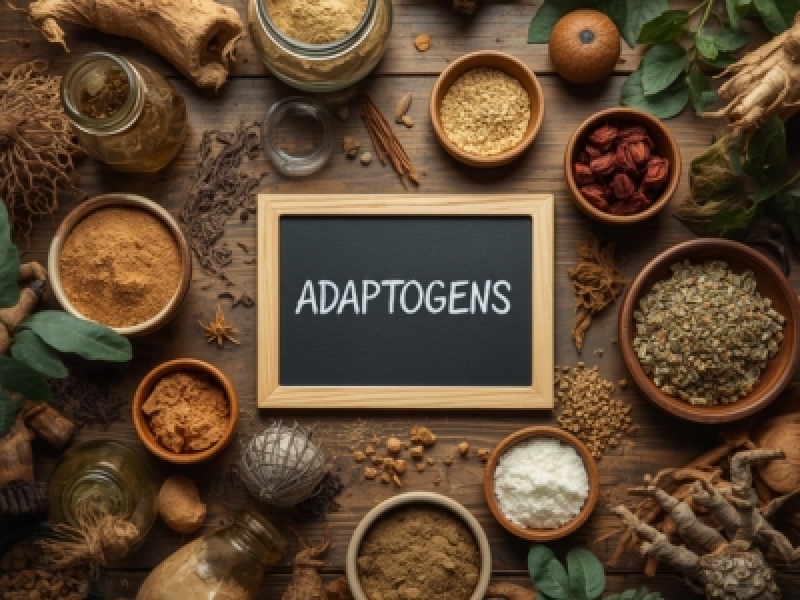
Adaptogens – guardians of homeostasis in the era of chronic stress
Categories :
Articles
In the world of phytotherapy, adaptogens occupy a special place. These are not ordinary tonics or stimulants, but substances with a unique ability to modulate the body's response to stress and restore balance without forcing one direction. The term "adaptogen" was introduced in 1947 by the Soviet pharmacologist Nikolai Lazarev, and deepened by Isaac Brekhman and I. Dardymov in the 1960s. This research was carried out, m.in, in the context of preparing cosmonauts and athletes for extreme conditions.
Mechanisms of action of adaptogens – how they really work at the cellular and systemic level
Adaptogens are not limited to modulating the HPA axis (hypothalamic-pituitary-adrenal). Their action is much more complex and multifaceted – they normalize the body's reactions depending on the current state, acting as intelligent regulators of homeostasis.
Here are the key mechanisms that distinguish adaptogens from other herbs:
- Induction of heat shock proteins (HSP70, HSP25): Adaptogens increase the expression of these molecular "guardians" of the cell. HSP70 protects neurons from damage, repairs damaged proteins and strengthens resistance to oxidative stress and physical fatigue. This is one of the reasons why adaptogens support not only the psyche, but also regeneration after exercise and aging processes.
- Modulation of key signaling pathways: Influencing SAPK/JNK, FOXO, NF-κB pathways, and longevity-related transcription factors. They act as mild hormetics – i.e. substances that, in small doses, "train" cells to better adapt, increasing their resistance to various types of stress.
- Effects on the gut microbiome and the gut-brain axis: More and more studies show that adaptogens (m.in. ashwagandha, ginseng or Lion's Mane) have a prebiotic effect – they increase the diversity of the microbiota, the production of short-chain fatty acids (e.g. butyrate) and strengthen the intestinal barrier. Thanks to this, they indirectly regulate mood, immunity and energy metabolism through gut-brain communication.
- Thanks to these mechanisms, adaptogens support not only cortisol balance, but also neurogenesis, glucocorticoid receptor sensitivity and proper mitochondrial function.
Herbal adaptogens – a wealth of diversity
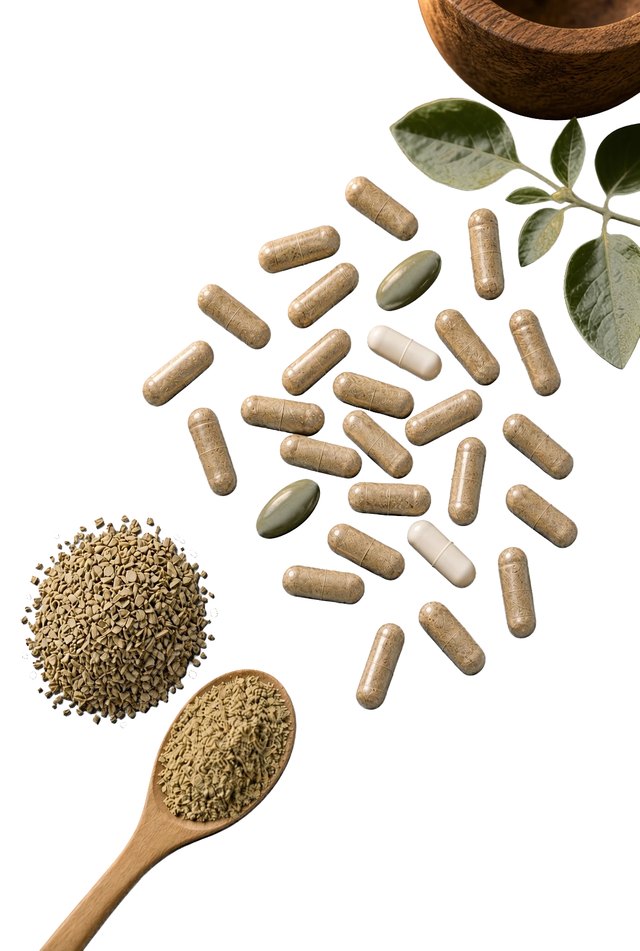
Here are the selected ones most valued in phytotherapy. Each of them will be discussed in detail in the following articles:
- Ashwagandha (Withania somnifera) – stands out for its effect on hormonal balance, including testosterone levels and thyroid function, and for supporting sleep quality thanks to withanolides.
- Rhodiola rosea – especially valued for its effect on mental fatigue, concentration and adaptation to altitude stress thanks to salidroside and rozavina.
- Panax ginseng – known for its comprehensive support of vital energy, immunity and cognitive function.
- Eleutherococcus senticosus (Siberian ginseng) – rich in eleutherosides, supports physical and mental performance.
- Schisandra chinensis – valued for protecting the liver and improving concentration.
- Tulsi (Ocimum sanctum) – holy basil, is characterized by strong immunomodulatory and antioxidant effects.
- Maca (Lepidium meyenii) – a Peruvian adaptogen that supports hormonal balance.
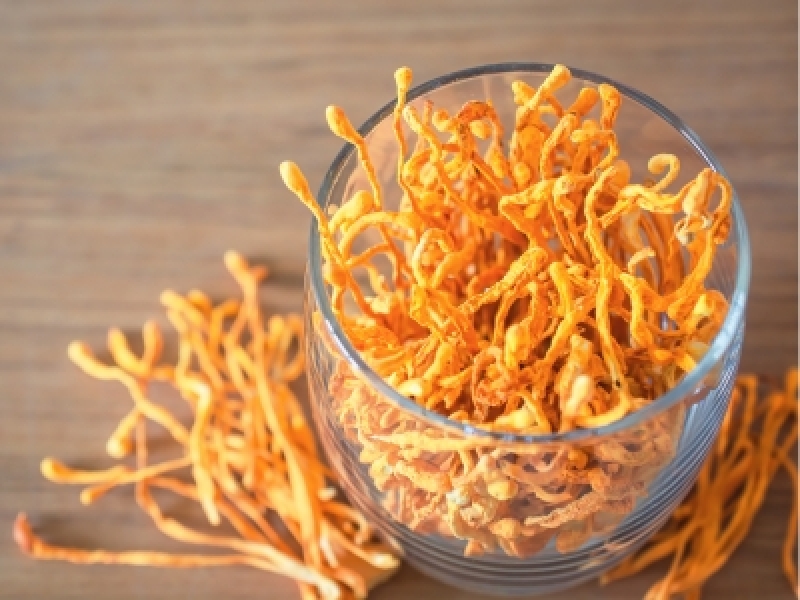
- Cordyceps, Reishi, Lion's Mane – adaptogenic mushrooms with a clear effect on cellular energy, neuroprotection and immunity.
Each of them has a unique phytochemical profile (terpenoids, lignans, glycosides), which allows for synergistic combinations – always under the supervision of a specialist.
Individual herbs will be discussed in detail in subsequent articles. Adaptogens are not magic pills for all the problems of today, but in the hands of a conscious user, they become a powerful tool supporting the body's innate ability to adapt.
Bibliography
- Bell L, et al. A randomized, placebo-controlled trial investigating the acute and chronic benefits of American Ginseng on mood and cognition, including in vitro investigation of gut microbiota changes. *Eur J Nutr*. 2022; 61(1):413-428.
- Evans C, et al. Addressing GI Health Through the Bidirectional Modulation of the Gut-Brain Axis with Adaptogens. *PMC*. 2024.
- European Medicines Agency (EMA). Reflection paper on the adaptogenic concept. 2007.
- Panossian A, Wikman G. Effects of Adaptogens on the Central Nervous System and the Molecular Mechanisms Associated with Their Stress-Protective Activity. *Pharmaceuticals*. 2010; 3(1):188-224. doi:10.3390/ph3010188.
- Panossian A. Understanding adaptogenic activity: specificity of the pharmacological action of adaptogens and other phytochemicals. *Ann N Y Acad Sci*. 2017; 1401(1):49-64. doi:10.1111/nyas.13399.
- Panossian A, et al. Evolution of the adaptogenic concept from traditional use to modern phytotherapy. *Med Res Rev*. 2021; 41(1):1-XXX.
- Such S, et al. System-Level, Molecular and Cellular Mechanisms of Adaptogens in Stress Response. *Nutrients*. 2026; 18(6):931.
Share this content